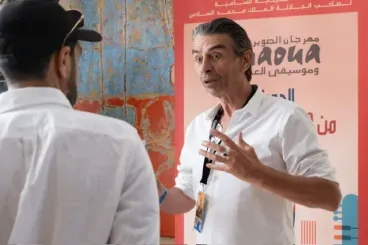
From June 19 to 21, as part of the Gnaoua and World Music Festival, the 12th edition of the Human Rights Forum brought together researchers, artists, and policymakers to explore a timely theme: «Human Mobility and Cultural Dynamics». Across four panel discussions, mobility was examined not merely as an economic or geopolitical phenomenon, but as a dynamic space of exchange, where culture, history, and representation play a vital role.
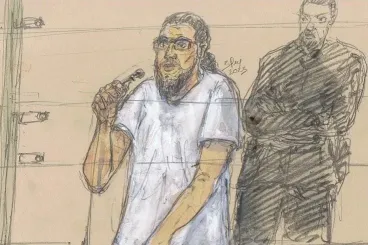
The special assize court of Paris upheld the life sentence of Mohamed Lamine Aberouz on appeal this Saturday, June 21, imposing a minimum term of twenty-two years. The verdict confirms the initial ruling, which found the French-Moroccan defendant guilty of complicity in the murder of a public official, complicity in the kidnapping of a minor under 15, and involvement in a terrorist conspiracy. The double murder, which took place on June 13, 2016, targeted a police couple in their home in
The issue of migration, traditionally viewed through the lens of destination countries, is now undergoing a profound reconfiguration of roles. Among countries of origin, transit, and destination, Morocco is emerging as a key player. On the occasion of World Refugee Day and the 12th edition of the Human Rights Forum, held as part of the 26th Gnaoua and World Music Festival in Essaouira, Yabiladi spoke with Pascal Blanchard, a specialist in the French colonial empire, postcolonial studies, and
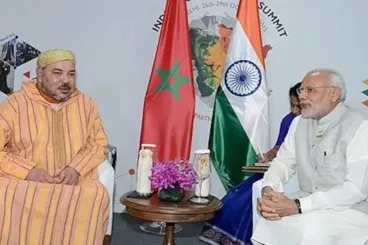
Indian Prime Minister Narendra Modi is set to embark on a diplomatic tour in early July, visiting five countries across Africa, Latin America, and the Middle East. The trip aims to reinforce India’s leadership within the Global South and promote an international coalition against terrorism, amid heightened security concerns following the Pahalgam attack. The tour will begin in Morocco, seen as a rising partner for India in both security and economic spheres. The visit to Rabat, long in
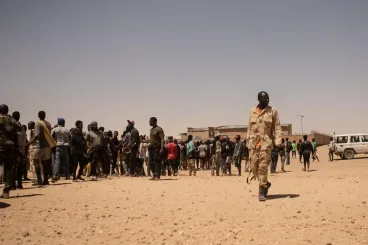
The United Nations Human Rights Council (UNHRC) opened its 59th regular session on June 16, running through July 9, at the Palais des Nations in Geneva. During an interactive dialogue with the Special Rapporteur on the human rights of migrants, Gehad Madi, several participants denounced Algeria’s mass expulsions of sub-Saharan migrants. A representative of the Network for Training, Research, and Action on African Migrations strongly condemned what she described as inhumane collective
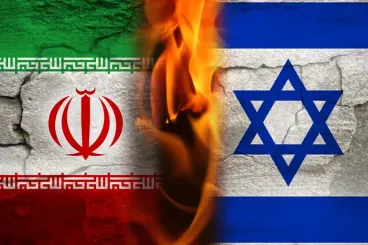
The National Action Group for Palestine has announced a solidarity march with Iran, scheduled for this Sunday, June 22, in Rabat. On Friday, June 20, the NGO held a sit-in outside the House of Representatives to denounce what it described as «Israeli aggression against the Palestinian and Iranian peoples». The day before, the organizers held a press conference urging «the Moroccan people to turn out in large numbers for the June 22 march». The Moroccan Front for the
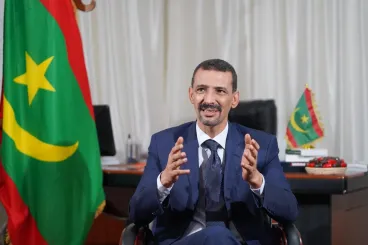
The Mauritanian government has defended its decision, made in May, to close the Lebriga region on the border with Algeria. «This is a domestic security measure aimed at controlling crossings and securing the borders», said Houssein Ould Meddou, Minister of Culture, Arts, Communication, and Relations with Parliament, and spokesperson for the Mauritanian government, in an interview with France 24 Arabic. «This decision has no political motivations and does not target any
Morocco Telecom has secured a €370 million loan from the International Finance Corporation (IFC) to fund the rollout of 4G services in Chad and Mali, the company announced Friday. The financing aims to improve access to high-speed internet, help bridge the digital divide, and support economic development, in line with the African Union’s goal of creating a unified digital market by 2030. Morocco Telecom, in which Emirati group e& holds a 53% stake, serves around 79 million
En 2024, les demandes d'asile marocaines dans les pays de l'UE+ ont chuté de 18 %, la plupart étant déposées en Italie, en Espagne et en Slovénie. Plus révélateur encore est l'augmentation des retraits de demandes. Rien qu'en Slovénie, les Marocains représentaient plus de 70 % de tous les retraits.
En 2024, las solicitudes de asilo de ciudadanos marroquíes en los países de la UE+ disminuyeron un 18 %, siendo la mayoría presentadas en Italia, España y Eslovenia. Aún más revelador es el aumento de los retiros de solicitudes. Solo en Eslovenia, los marroquíes representaron más del 70 % de todos los retiros.



 chargement...


 المقالات الأكثر...










 إشترك في النشرة الإخبارية اليومية